
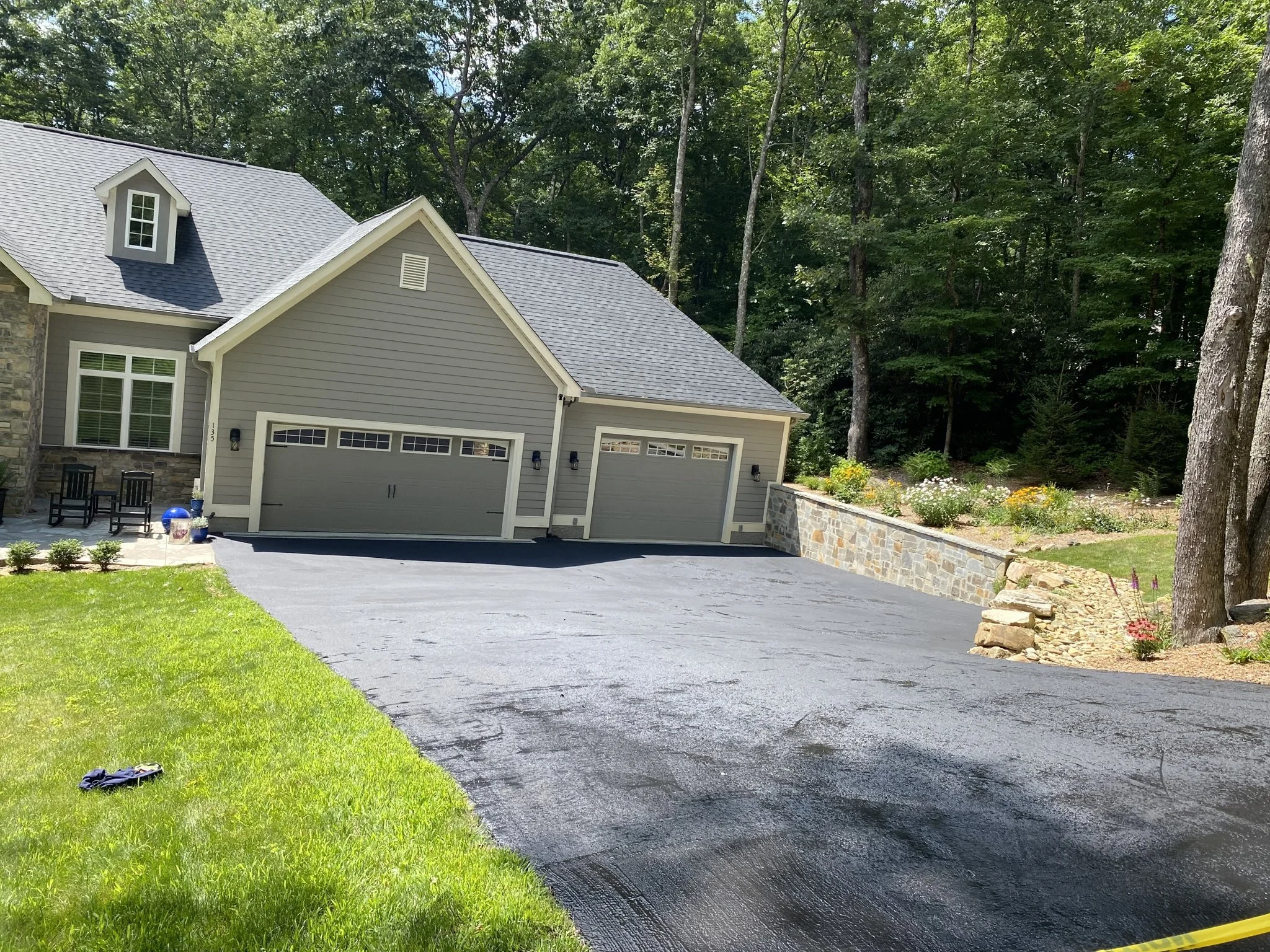
Asphalt Sealcoating & Crack Sealing in Franklin, NC and Across the Mountains
Asphalt doesn't wear out so much as it dries out. Sun and air oxidize the binder that holds it together, the surface turns gray and brittle, cracks open, water gets into the base, and winter freeze-thaw does the rest. Sealcoating and crack sealing interrupt that cycle. They're the least expensive thing you can do to get more years out of a driveway or parking lot.
Black Bear Paving sealcoats and repairs residential driveways and commercial lots across Franklin, Highlands, Cashiers, Sylva, and Rabun County, Georgia. Because we also pave, we'll tell you plainly whether your asphalt needs sealing, repair, or neither yet. Call (828) 349-3390 or request a free estimate.
Sealcoating & Asphalt Maintenance Services
Driveway Sealcoating
We clean the surface, treat oil spots, seal the cracks, and apply a commercial-grade sealer. The result is a uniform black finish that sheds water and is easier to sweep, blow off, and plow.
Parking Lot Sealcoating
Sealcoating for commercial lots, phased so part of the lot stays open, followed by fresh striping.
Crack Sealing
Cracks are how water reaches the base, and in a climate with as many freeze-thaw cycles as ours, a crack that takes on water gets wider every winter. We clean and seal cracks before the sealer goes down. If you only do one thing for your pavement, do this.
Patching & Repairs Before Sealing
Sealer protects sound pavement. It does not fix potholes or areas that have broken up. We cut out and patch failed spots first so the seal coat goes over a surface worth protecting.
Line Striping
Restriping after sealcoating: stalls, arrows, fire lanes, and accessible spaces.
What Sealcoating Does, and What It Doesn't
It does slow oxidation from sun and air, keep water out of the surface, resist oil and gas drips, and restore a clean black appearance that makes a property look cared for.
It doesn't add structural strength, fill potholes, level low spots, or rescue pavement whose base has failed. If your asphalt is alligator-cracked or breaking up, sealing it is money wasted, and we'll tell you so. The right fix there is patching, an overlay, or replacement. See asphalt driveways.
How We Sealcoat
Clean. We blow and broom the surface and edge back grass so the sealer bonds to asphalt, not to dirt.
Prime and repair. Oil spots are treated, cracks are sealed, and failed areas are patched.
Apply. Sealer goes on in even coats, cut in carefully along garages, walks, and stone work.
Cure. We block the driveway or lot and tell you exactly when it can take foot traffic and vehicles.
When to Sealcoat in the Mountains
Sealer needs warm, dry weather to cure: mild temperatures day and night and no rain in the forecast. In the mountains that makes sealcoating a late-spring through early-fall job, and at the elevation of Highlands and Cashiers the window is shorter still. Our schedule for the warm months fills early, so winter is the time to get on the list for spring. Crack sealing and patching have a longer season and are worth doing before winter if your pavement has open cracks.
New asphalt should not be sealed right away. It needs time to cure, typically six months to a year, before its first coat. After that, most driveways benefit from sealing every two to four years depending on sun, traffic, and how the last coat is wearing.
What Affects the Cost of Sealcoating
The size of the area, the condition of the surface, how much crack sealing and patching is needed first, the number of coats, access, and for lots, phasing and striping. Sealcoating costs a small fraction of what repaving does, which is why it pays to do it on schedule.
Where We Sealcoat
Based at 6456 Sylva Road in Franklin, we cover Macon County (Franklin, Highlands, Otto, Scaly Mountain), Sylva and Jackson County (Sylva, Cashiers, Cullowhee, Dillsboro, Whittier, Cherokee), Bryson City and Swain County, and Clayton and Rabun County, Georgia (Clayton, Dillard, Rabun Gap, Sky Valley, Mountain City, Tiger, Lakemont, Lake Burton, and Lake Rabun).
See recent sealcoating jobs in Cashiers on Our Work.
Sealcoating FAQs
How often should I sealcoat my driveway?
Most driveways benefit from sealcoating every two to four years. Sealing more often than the surface needs can cause buildup and peeling, so we go by how the last coat is wearing.
How soon can new asphalt be sealed?
New asphalt needs to cure first, typically six months to a year. Sealing too early traps the oils that need to work their way out and leaves the surface soft.
How long before I can drive on a sealcoated driveway?
Usually 24 to 48 hours, depending on temperature, shade, and humidity. Shaded mountain driveways take longer to cure, and we'll give you a specific time.
Will sealcoating fix the cracks in my driveway?
Not by itself. Cracks need to be sealed with a dedicated crack sealant before the seal coat is applied, and areas that are breaking up need to be patched. We handle all three.
What time of year do you sealcoat?
Late spring through early fall, when it's warm and dry enough for the sealer to cure. We book the season in advance, so contact us over the winter to get on the spring schedule.
Is my driveway too far gone to sealcoat?
If it has widespread alligator cracking, soft spots, or sections breaking apart, sealing won't help. We'll tell you honestly and price the repair or repaving instead.
Do you sealcoat in Highlands and Cashiers?
Yes. We sealcoat driveways and lots throughout Macon and Jackson counties, including Highlands, Cashiers, Sapphire, and Glenville.
Ready for a Free Estimate?
Call (828) 349-3390 or request a quote online — we'll get right back to you.